- id_12374582
- Version: 1.6
- Date: Jan 17, 2020 11:17:15 AM
Cradle Latch Assembly Replacement
Prerequisites
| Required persons | Preliminary requirements | Procedure | Finalization |
|---|---|---|---|
| 1 | Not Applicable | 45 minutes | Not Applicable |
|


Overview
This procedure outlines the necessary steps for replacing the cradle latch housing for a 32-channel system or a 16-channel system. Although it should be noted that the 16-Channel system does not allow for the complete removal of the cradle assembly for ease of work.
Removing the Cradle Latch Housing
Procedure
- Undock the patient table.note:
Removing the table from the magnet room depends entirely on servicing needs.
- Hold down the cradle latch block and press the cradle release
button at the same time.
Figure 1. Cradle Removal
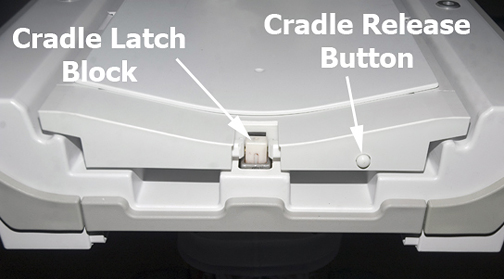
- While holding down the cradle latch block and pressing the cradle release button, slide the cradle forward enough so it covers the top area of the latch block. Let go of the cradle latch block and cradle release button.
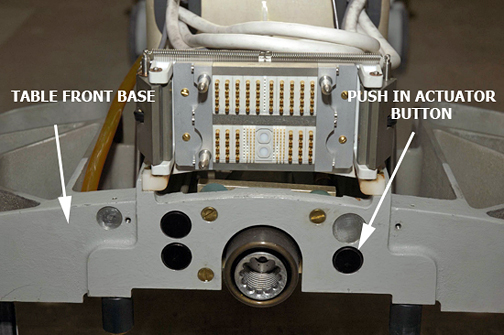
- Push in the right actuator on the table front base.
Figure 2. Table Front Base
 note:
note:Pressing the actuator button engages the secondary cradle latch cable and causes the pin stop to move down flush with the table top surface, allowing the cradle to slide forward.
- For a 16-channel system, prop up the cradle (see below) or remove it from the patient table to perform desired maintenance.
- For a 32-channel system, do one of the following:
- To remove the cradle from the table:
-
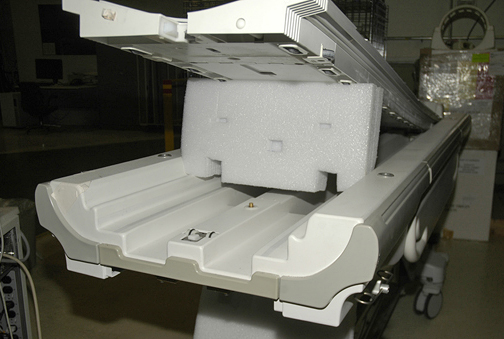
Use wood blocks (or similar) to prop up the rear of the cradle at least 12 inches above the table top to expose the cable take-up assembly.
-
Remove screws and cable cover.
note:These are specific, pure-brass screws. Do not mix up or replace with standard brass screws.
-
Remove the four screws.
-
Remove the two coil connector screws.
-
- To partially remove the cradle from the
table:
-
Slide the cradle forward far enough to clear the cradle guide rail latches at the rear of the table.
-
Use wood blocks (or similar) to prop up the front of the cradle.
-
Figure 3. Propping Up the Back of the Cradle
- To remove the cradle from the table:
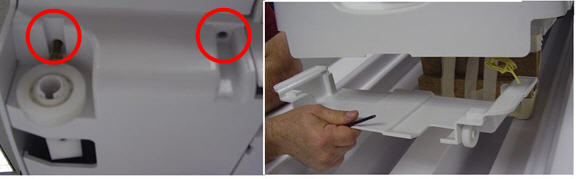
- With the cradle raised, remove the cable covers at the head
of the cradle held by two screws on each side. See below.
Figure 4. Cable Cover Removal
- Untie the knot in the Kevlar cord. A scribe or other tool may
be needed to loosen the knot. See below.
Figure 5. Kevlar Cord Knot and Release Lever Screw
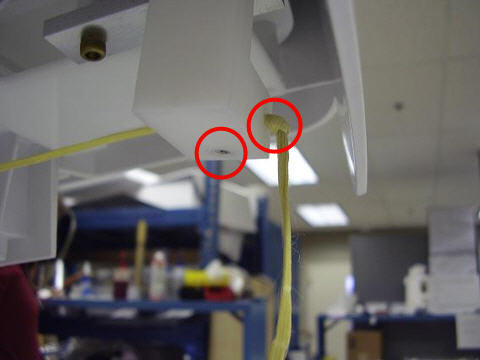
- Remove the screw on the bottom of the release lever that holds the Kevlar cord in place. See above.
- Pull out the rivet from the side of the release lever, noting
that the Kevlar cord is positioned over the rivet. See below.
Figure 6. Release Lever Rivet
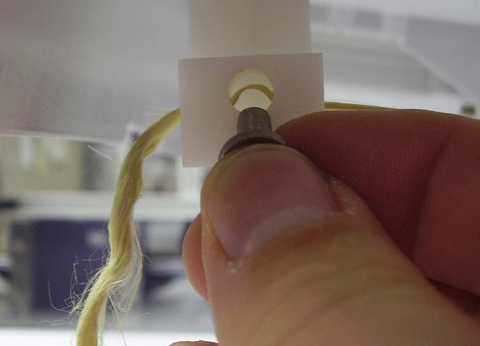
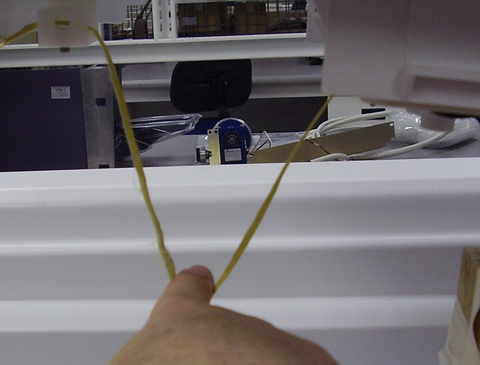
- Pull the Kevlar cord through the release lever approximately
6 inches. DO NOT pull the cord out of the release
lever completely.
Figure 7. Loosen Kevlar Cord
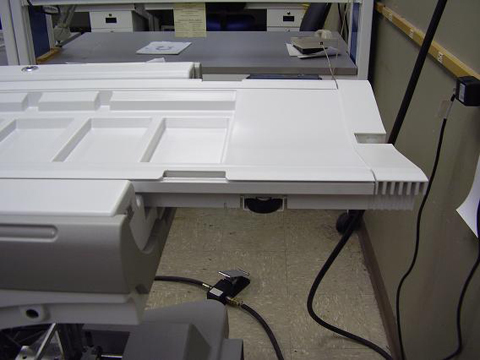
- Remove the blocks or other structure used to elevate the cradle.
Put the cradle back down so that there is approximately 18 inches
overhang at the foot of the table. See below.
Figure 8. Cradle Position
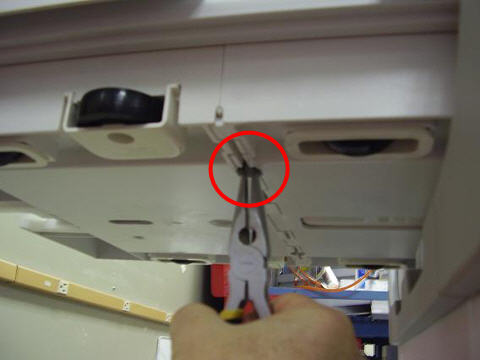
- Pull the cradle hinge pin out. The cradle hinge pin can only
be removed on the left side of the table. Push out the pin on the
side using large needle nose pliers. See below.
Figure 9. Remove Hinge Pin
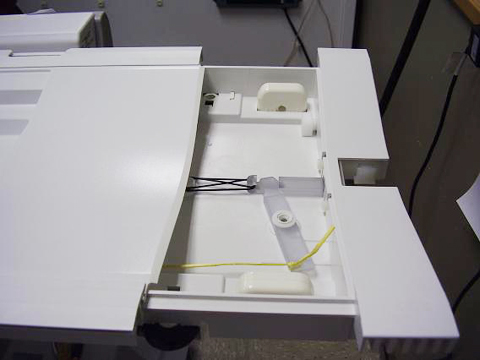
- After the hinge pin is removed, slide the front cradle section
out. See below.
Figure 10. Extend Cradle Section
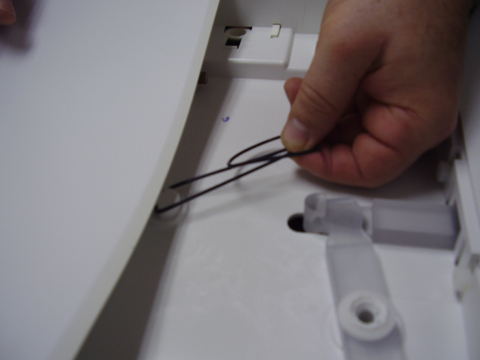
- Remove the rubber latch spring. See below.
Figure 11. Remove Latch Spring
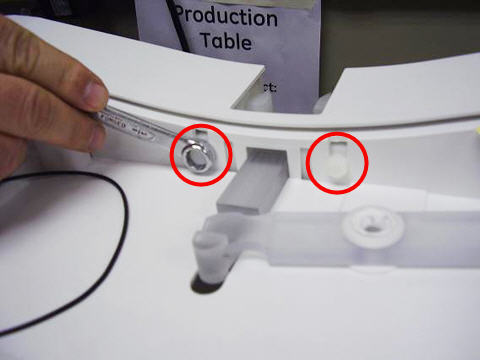
- Remove the two nylon screws. See below.
Figure 12. Remove Nylon Screws
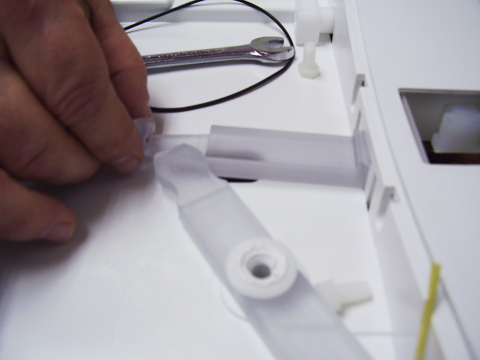
- Unhook the release lever from the release bar. This is accomplished
by pulling the release bar, lifting slightly, and away from the lever.
See below. The latch assembly will then be free to pull down and remove.
Figure 13. Remove Release Lever
 note:
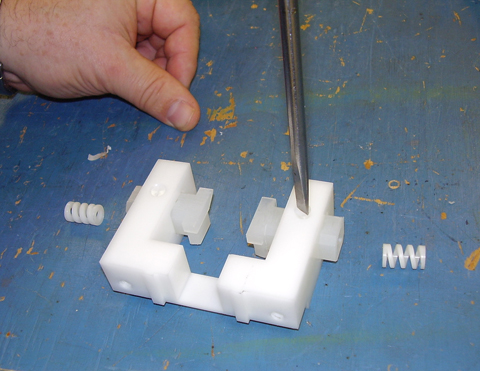
note:There are two Delrin springs installed on each side of the latch assembly. These springs are required for reuse with the new cradle latch assembly.
- Remove the cradle latch assembly from table cradle.
- Remove the two plastic screws on top of the removed latch assembly.
Then remove the latch blocks. Note the orientation of the angles on
the latch blocks for installing the new cradle latch assembly. See
below.
Figure 14. Cradle Latch Disassembly
Installing the Cradle Latch Assembly
Procedure
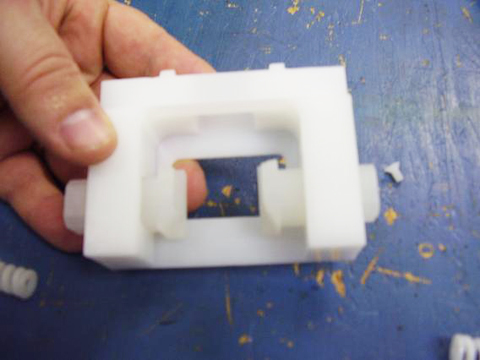
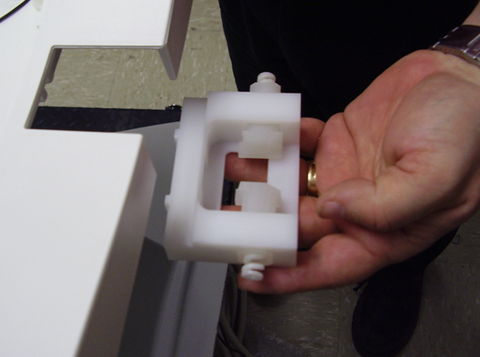
- Install latch blocks and plastic screws into the new latch assembly.
Make sure the screws go through the slots on the latch blocks. See
below. When assembled properly, the latch blocks will have limited
side-to-side movement but will not fall out of the assembly.
Figure 15. New Cradle Latch Assembly
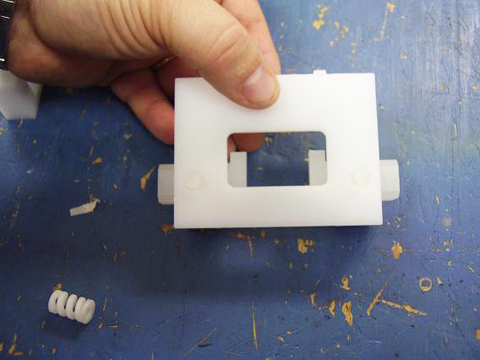
- After the new cradle latch assembly is assembled, position the
flat side of the latch blocks on the bottom. See below.
Figure 16. Latch Block Orientation
- Install the new cradle latch assembly into the table as shown
below.
Figure 17. Latch Installation
- Install nylon screws. See Figure 12.
- Install the new release bar with the new latch assembly. This requires lifting the end of the release lever in order to place the release bar into the guide slot as performed in Step 17.
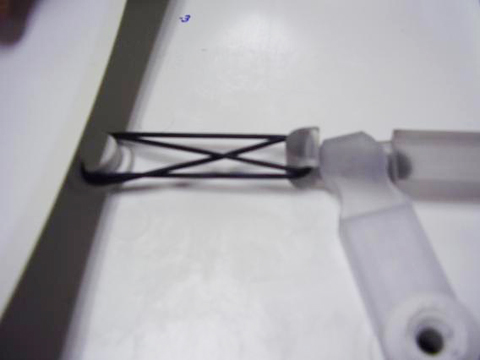
- Replace the rubber latch spring as shown below.
Figure 18. Reinstall Latch Spring
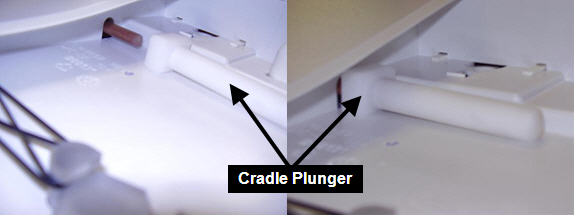
- Position the front cradle plunger onto the cradle rod. See below.
Figure 19. Cradle Rod Re-Installation
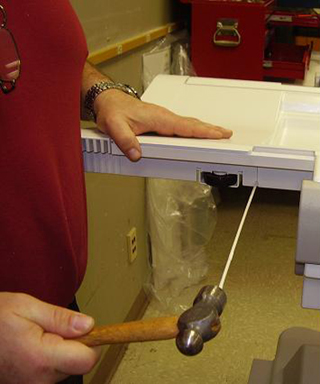
- Slide the cradle back together. Install the hinge rod. A hammer
may be required to tap the hinge rod back into position. See below.
Figure 20. Hinge Pin Installation
- Lift the cradle and support it to gain access to the Kevlar cord. See Figure 3.
- Insert the rivet back into the release lever, ensuring that
the Kevlar cord is routed OVER the rivet when
it is installed as shown Figure 6.
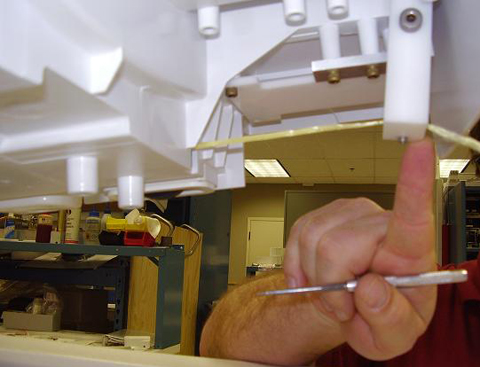
Pull the Kevlar cord taut without causing the release bar to protrude
into the latch housing. The illustration below shows that the lever
should be pushed toward the front of the cradle when performing this
step.
Figure 21.
- Verify that the release mechanism is not pulled out, then tighten the screw in the release lever.
- Tie a new knot in the Kevlar cord running through the release lever. See Figure 5.
- Install the covers. See Step 7.
- Perform Cradle Release Block Adjustment.
Finalization
Finalization
Verify that the cradle attaches to the LPCA and the latch mechanism operates properly.