Severe injury can occur if the table is accidentally lowered during maintenance.
When doing maintenance with the table in the Up position, make sure the lock bar is safely engaged.
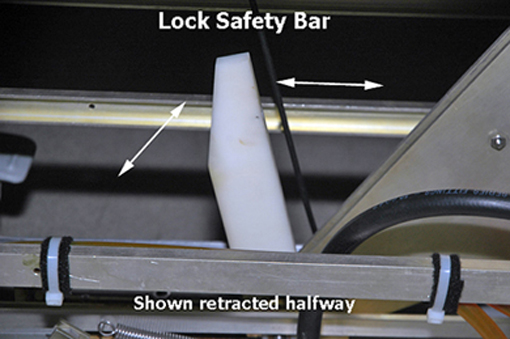
Lower the table lock safety bar.
Figure 2. Table lock safety bar
Lower the table and verify that all of the table top's weight is resting on the safety bar.
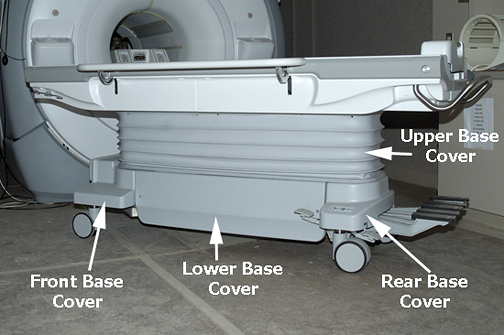
Remove front base cover.
Undock the patient table.
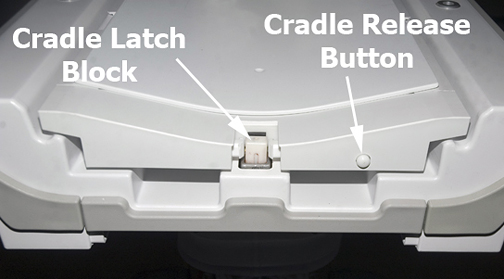
At the same time, press the cradle latch block and push in the cradle release button at the front of the cradle.
Figure 3. Cradle Removal
While holding down the latch block and pressing the cradle release button, slide the cradle forward enough so that the cradle covers the top area of the cradle latch block. Release the latch block and cradle release button.
CAUTION
PINCHED FINGERS!
FORWARD MOVEMENT OF CRADLE CAN PINCH FINGER WHILE HOLDING DOWN CRADLE LATCH BLOCK.
MOVE CRADLE FORWARD SLOWLY AND DELIBERATELY UNTIL BOTTOM EDGE OF CRADLE SUFFICIENTLY COVERS TOP OF CRADLE LATCH BLOCK SO THAT YOU CAN REMOVE YOUR FINGER FROM BLOCK.
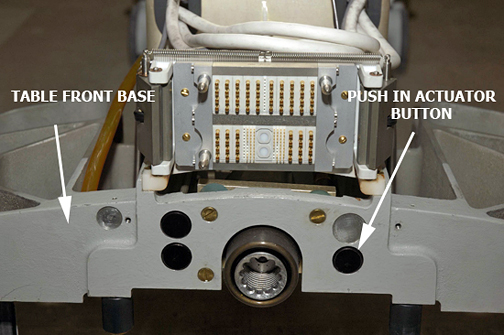
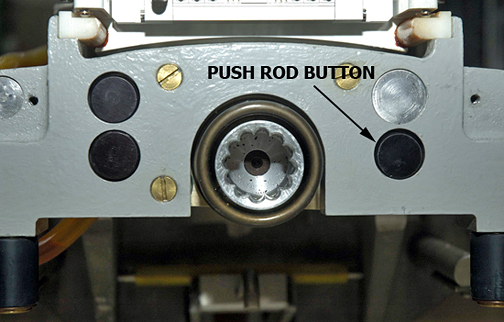
Push in the right actuator on the table front base.
Figure 4. Table Front Base
Note:
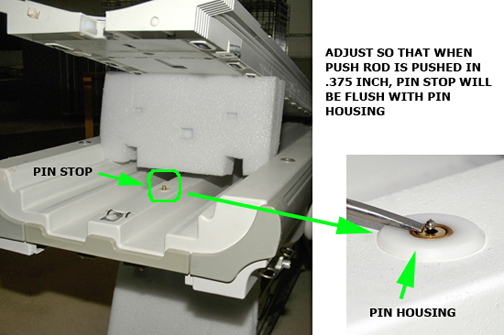
Pressing the actuator button engages the secondary cradle latch cable and causes the pin stop to move down flush with the table top surface, allowing the cradle to slide forward.
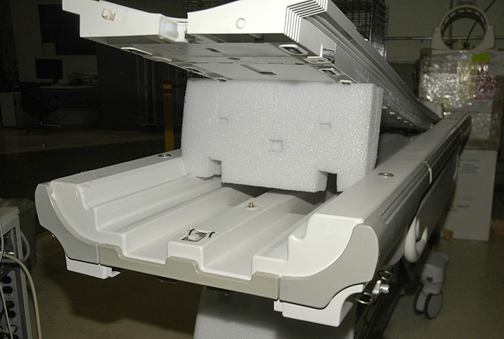
Prop up the cradle or remove the cradle from the patient table to perform desired maintenance.
Figure 5. Prop Up Cradle
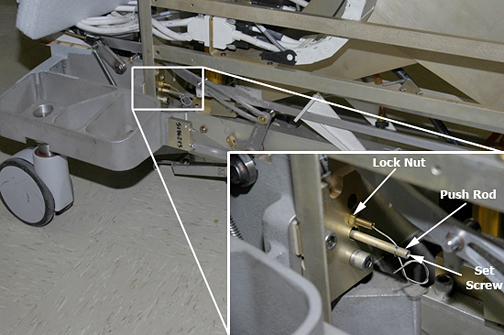
Adjust cable so that when push rod button is pushed in 0.375” (9.6 mm), pin stop is flush with pin housing. Use threaded cable adjuster for fine adjustment. Tighten lock nut after adjustment is completed, then cut off excess length of cable.
Replace the cradle, front base cover, upper and lower base covers.
Return the table to the magnet room and dock the table.
Drive the cradle into the magnet to expose the cradle release pin. Make sure that the release pin is flush to 1/16 inch (2 mm) below flush when the table is docked.
Finalization
Dock the table.
Make sure that the cradle release functions properly.
Make sure that the LPCA connects to the cradle and that the cradle can move into the bore.