- Topic ID: BJ_211018_L01
- Version: 2.0
- Date: May 23, 2022 11:22:34 PM
(20BW15.31 or later) Load From Cold
Prerequisites
Overview
The following procedure describes and illustrates the system software loading process commonly referred to as the Load From Cold (LFC). It is important to follow the steps listed below in order.
1 Software Deliverable
CT Operating System and Applications Software.
2 Pre-LFC Checks and Information Gathering
Procedure
- Confirm that a current System State Backup Media is on site. If unsure of the status of the System State, execute section Save System State (Approximately 5 minutes) to save a System State Backup to USB Flash Drive.

- notice
- Remove USB Flash Drive from the host computer before starting the OS Load of the LFC process.
3 Information Capture
3.1 Common Information Capture
Procedure
- Record Autovoice Volume control settings (ALT-F3 by Toolchest, upper right corner).
- Write down all of the system INFO information on the reconfig screens, including the network information.
- notice
- Verify and record specific system hardware configuration.
- Open a shell and type the following:
{ctuser@hostname}cat /usr/g/config/INFO
- Record screen information.
- Open a shell and type the following:
- If the console has Connect Pro installed, write down the information when you run installhisris so it can be entered on the new console when installing the Connect Pro option.
- Close the Service Desktop window in the upper left corner of the screen.
3.2 Information Capture for Option Installation
If your system does NOT have Exam Split option, skip this section. Perform these steps before powering down your current Operator Console:
- Open a Unix Shell and type the following:
- {ctuser@hostname} su -
- Password:
<password>note: If the Password has not been modified by the site and is not known, please contact the Local GE Service.
- [root@hostname]
ls -l ~ctuser/ves/.hesModenote: There are no spaces in the phrase ~ctuser/ves/.hesMode
- Examine the results.
- If the results are similar to:
-rw-r--r-- l ctuser users 0 Apr 3 12:43
/usr/g/ctuser/ves/.hesMode
The HES (Hard Exam Split) mode is configured.
- If the results show 'No such file or directory', then VES (Virtual Exam Split) mode is configured.
- If the results are similar to:
- Record Exam Split Mode (Hard or Virtual). This info will be used during the LFC Options Installation.
- Close the Unix Shell.
4 Save System State (Approximately 5 minutes)
Procedure
- Save the nanoAWS User Preference if there is nanoAWS installed on CT console and it has customized protocols (batch protocol) in nanoAWS, refer to DOC2507368_NanoCloud AWS Installation to find how to save nanoAWS User Preference.
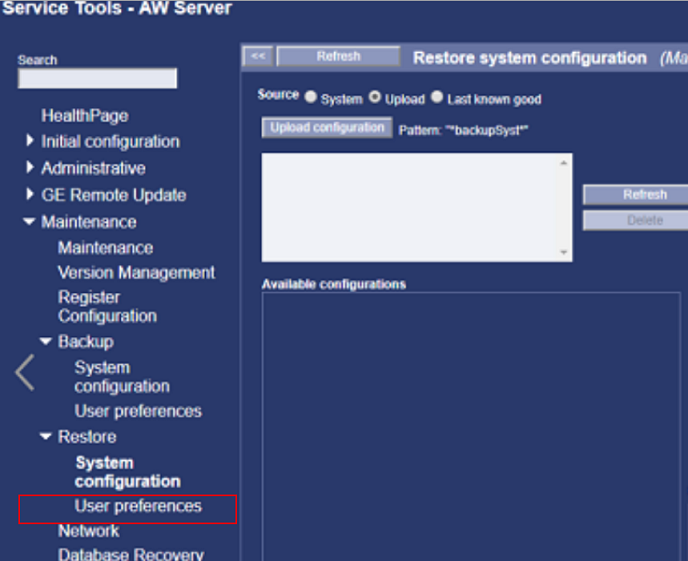
Confirm the backup file of User Preference is saved in CT console/usr/g/ctuser/Download.
- Plug the USB Flash Drive into the Host Computer.
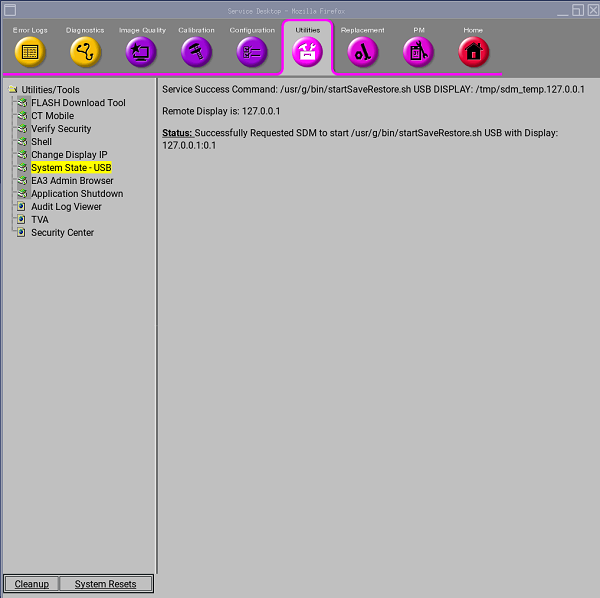
- Open Service Desktop and select Utilities.
Figure 1. Common Service Desktop (CSD), Utilities Tab
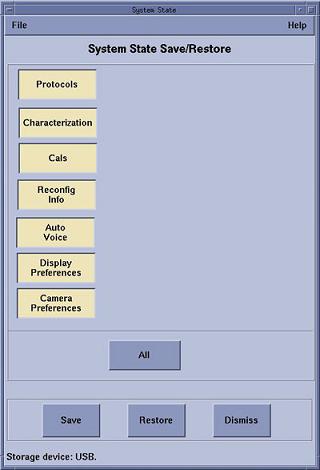
- Select System State - USB and select All, then press Save in the opening window.
Figure 2. Save System State Window
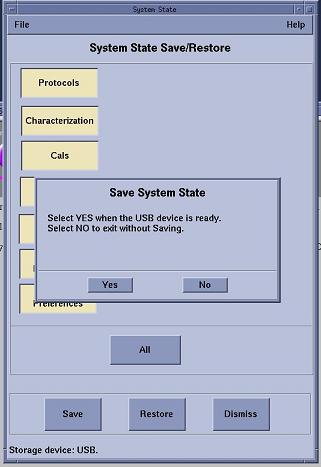
- Click Yes in the System State Media Ready pop-up window to start the save process.
Figure 3. System State USB Media Ready Pop-up Window
- Verify that the Save of System State was successful. A message at the end of the System State Message Log Window should state: Save/Restore System State: Completed Successfully.
Figure 4. System State Message Log Window
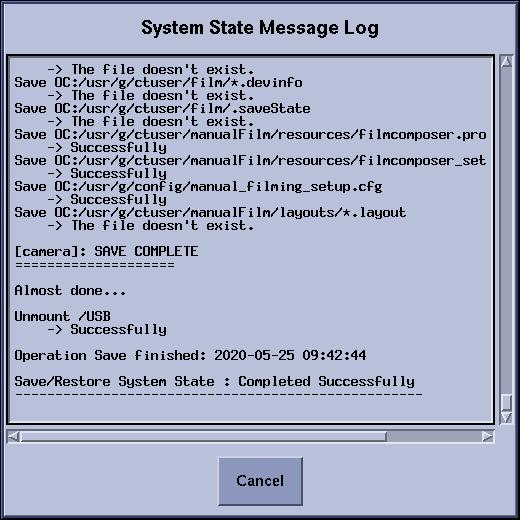
- When completed, click Cancel in the System State Message Log Window, then Dismiss in the System State Media Ready Pop-up Window.
- Close the Common Service Desktop window.
5 Operating Software (OS) Load (Approximately 15 minutes)
Procedure
- Confirm that the USB Flash Drive been plugged into the Host Computer. If not, plug the USB Flash Drive into the Host Computer again.
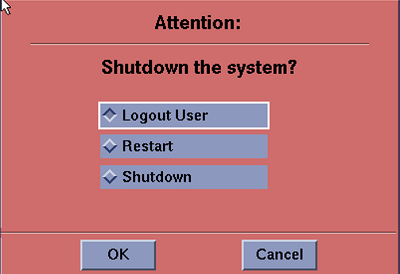
- Press Shutdown and select Restart.
Figure 5. System Shutdown Attention Window
- BIOS TPM Setup
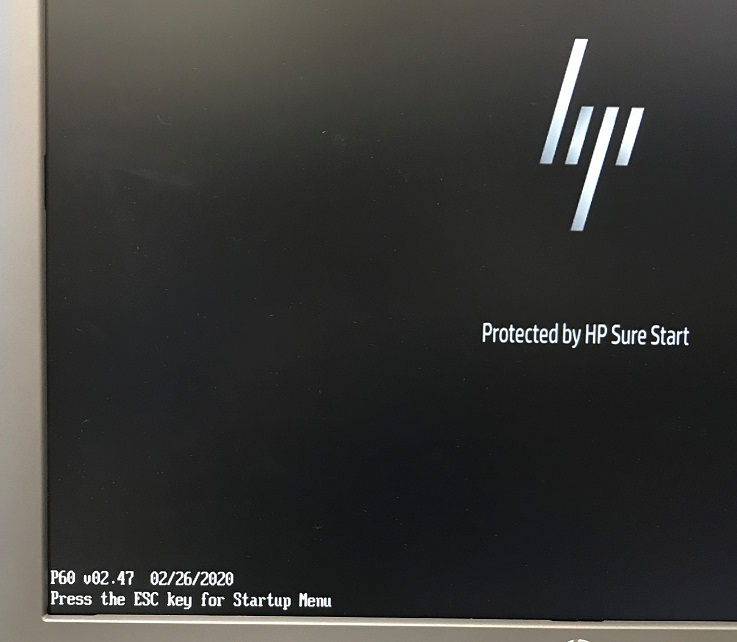
- When system begin to boot, press Esc on the keyboard when screen shows BIOS version at bottom left.
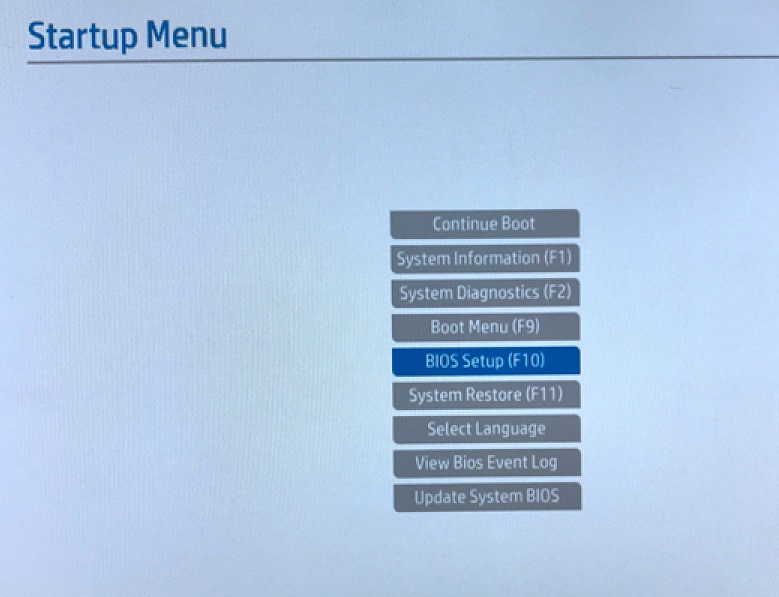
- Select BIOS Setup (F10) in the Startup Menu.
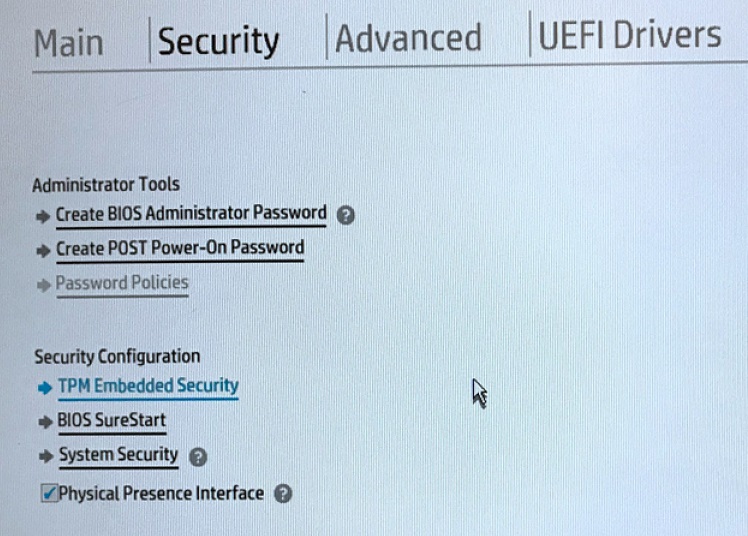
- Switch to Security tab and select TPM Embedded Security, then press Enter.
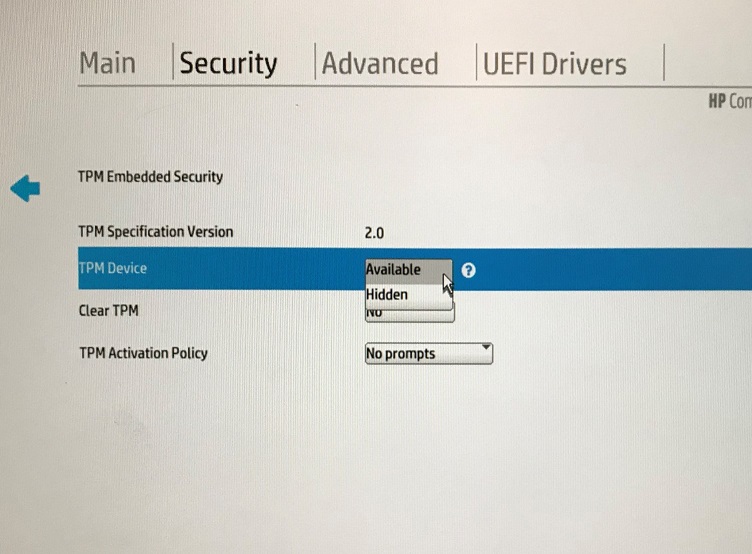
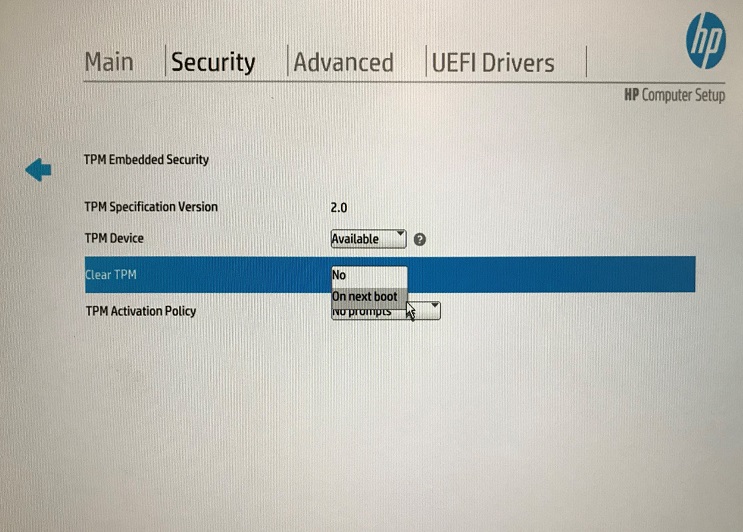
- Set TPM Device to Available, set the Clear TPM to On next boot.note: It is NOT necessary to Set Clear TPM for the FIRST LFC.
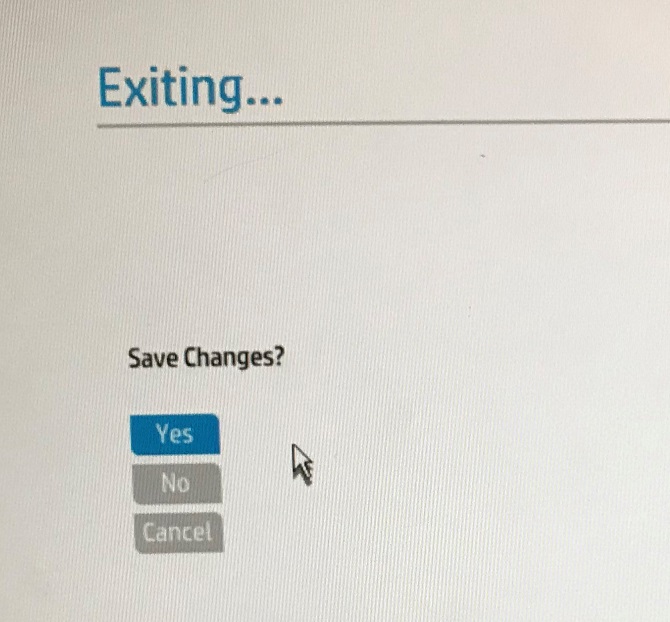
- Press F10 on the keyboard, then select Yes to save change and exit.
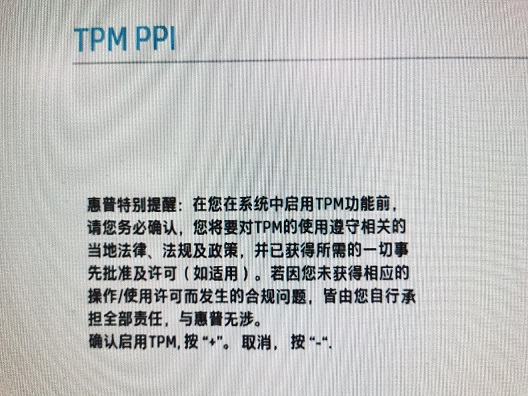
- After rebooting, a Chinese message show as below and press + on the keyboard to continue. System will reboot again.note: Below message pops up only when the first LFC.
- After TPM Setup done, System will save the change and reboot automatically.
- When system begin to boot, press Esc on the keyboard when screen shows BIOS version at bottom left.
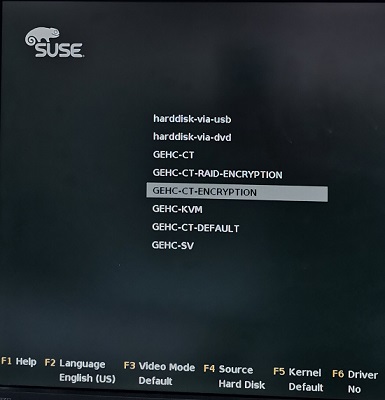
- As the Host Computer restarts, the boot process GUI appears. Select GEHC - CT-ENCRYPTION.
Figure 6. OS Boot Screen Prompt
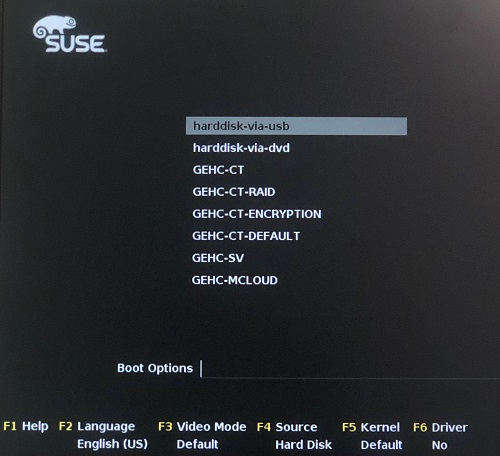
- During the OS installation, host reboot happens (See Figure 7). The first line is selected by default, do NOT take any action. Wait for a moment until OS installation completion.
Figure 7. During the OS Installation
 note: Dual Monitor Displays: From this point in the procedure, only right side monitor display will appear. This is normal, do not move monitor video cables! This condition will be resolved after the Application Software is loaded on the system.
6 Applications Software (APPS) Load (Approximately 60 minutes)
Procedure
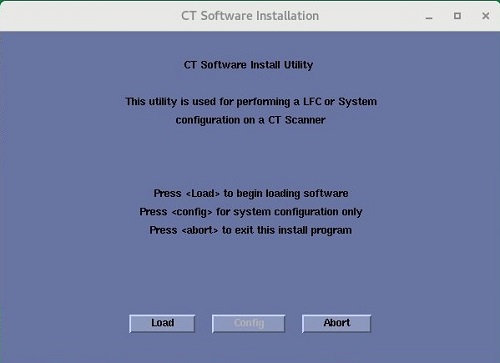
- Select Load in the CT software installation window.
Figure 8. Apps Load Command Window
- System State decision for Install INFO decision box will appear.
Select Yes, then continue with Step 3.
Figure 9. Install INFO Window
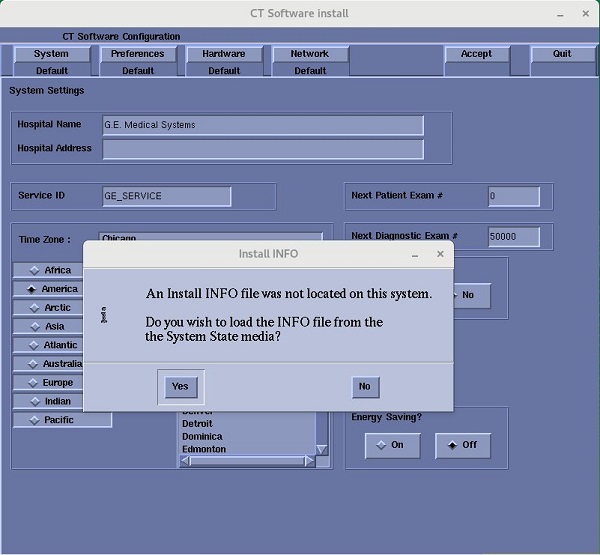 note: If a valid and current System State Backup media is not available (e.g the state USB from CT manufactory do not save INFO), answer [No] and manually configure the Hardware Tab to define System and Console Type in accordance with the procedure Manually Configuring System INFO. Then all Tabs including System, Preferences, Hardware, Network and Security can be reviewed and modified.
 - System State (Install INFO) window will appear.
Press OK.
Figure 10. System State Window
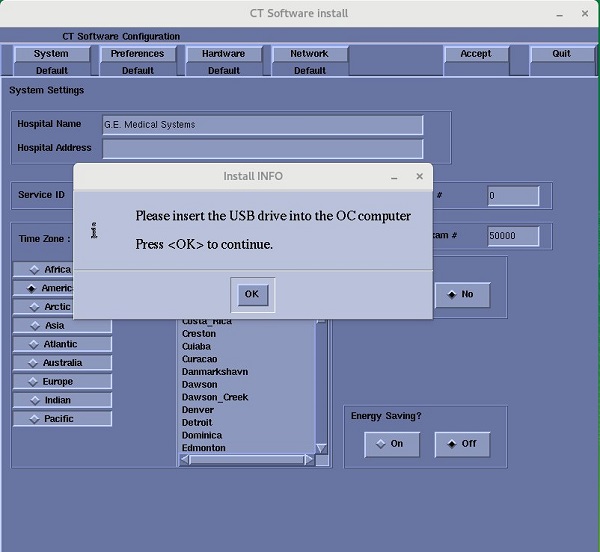
- The Install INFO on the System State Backup Media will be read and an INFO window will become active.
Select Accept.
Figure 11. Install INFO - Accept Window

- The Install INFO on the System State Backup Media will be displayed and a confirmation window will appear.
Select YES.
Figure 12. Install INFO - Confirm Window
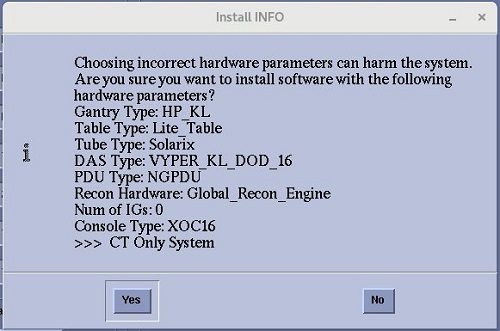
Figure 13. Install INFO - Confirm Window
Figure 14. Install INFO - Confirm Window_BrightSpeed Elite Select
Figure 15. Install INFO - Confirm Window_BrightSpeed Elite
note: Install INFO detail in illustration will differ depending on System type. Verify that the Install INFO detail is correct for the system before selecting YES. - System Install INFO will be now used to create the CT Applications load routine.note: After clicking the Accept of reconfiguration, wait for a few seconds, then remove System State Backup Media from USB port. Do not remove the CT Software USB Flash Drive until it completes successfully.
Figure 16. CT Applications Software Load Windows
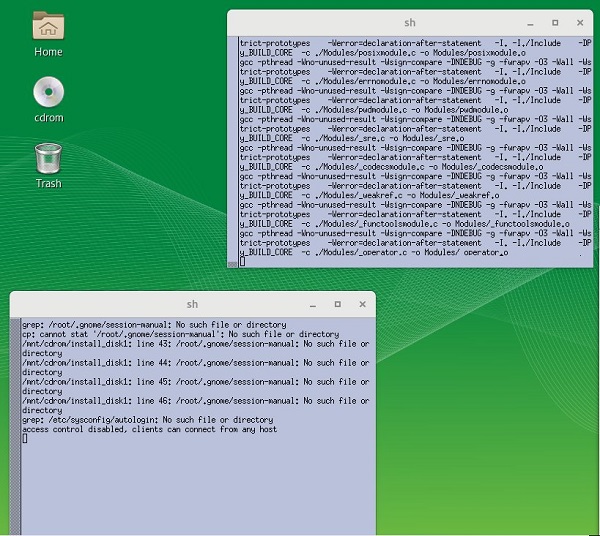
- When completed, the Operator Console will automatically reboot.
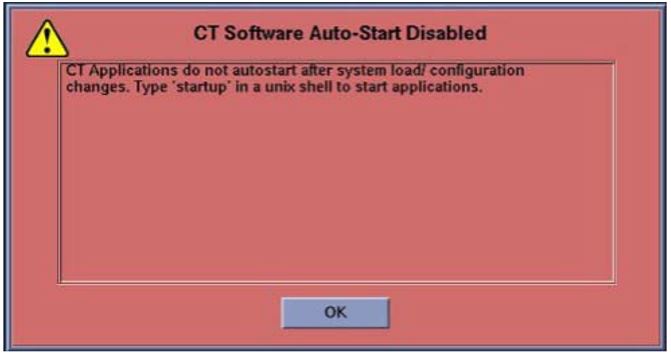
- After the Host Computer reboots, a pop-up window will appear.
Click OK to close window.
Figure 17. CT Software Auto-Start Disabled Pop-Up Windows
- Go to next steps to Set Time and Date.
7 Set Time and Date
Procedure
- Open a unix shell and log in as root:
- {ctuser@hostname} su -
- Password:
<password>note: If the Password has not been modified by the site and is not known, please contact the Local GE Service.
- Set date and time. Type the following:
{root@hostname}# setdate Enter to be prompted through the individual entries.
- Upon completing either of the above commands, the user will receive the following responses:
Current OC date : Fri Apr 17 16:14:05 CDT 2020
[root@hostname]#
setdate completed with NO ERRORS.
- Type: [root@hostname]#exit
- Type st [Enter], start the system.
8 Password Change Process
Set new password for each User [root] [ctuser] [insite].
The password must have the followings at least.
- 1 numbers
- 1 lowercase letters
- 8 or more characters
- 1 special characters (ex. !@#$%&*?_)
- 1 uppercase letters
Procedure
- Change the passwords for each User [root] [ctuser] [insite].
Figure 18. Change OS password screen
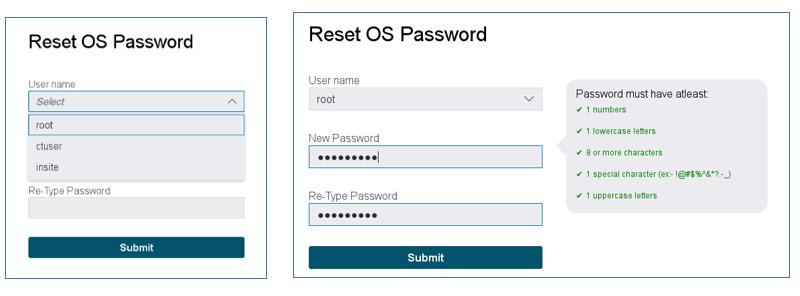
- Record new passwords. If the new password is lost, LFC must be done again.
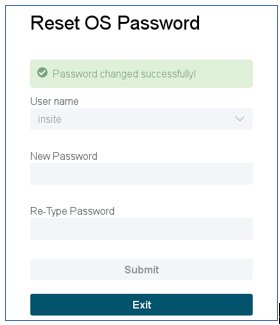
- After setting the password for [insite], click the Exit button. The Application software starts up automatically.
Figure 19. Exit Reset OS Password screen
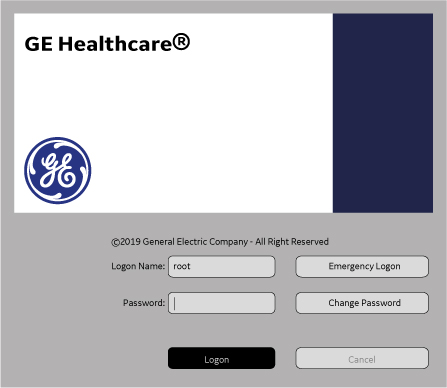
- Enter root password and Login to the following windows.note: Use default root user password at this time because the password is in EA3 setting.
Figure 20. Login Screen
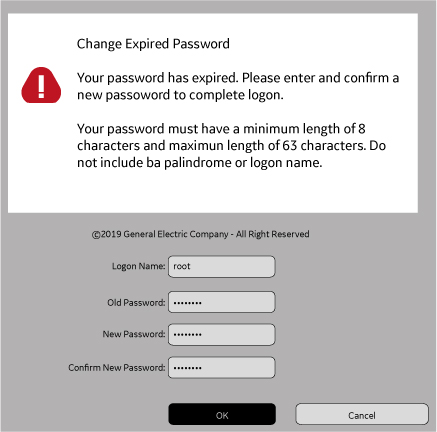
- The Change Expired Password screen appears. Enter old password as default root password and new password as same as set in previous step. Then click OK.
Figure 21. Changing Password 1
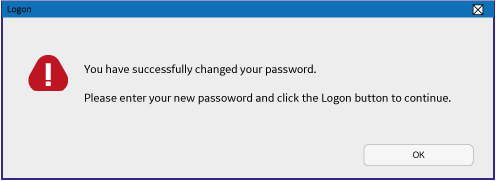
- Make sure that the message [You have successfully changed your password] in the displayed window. note: After that, new root user password must be used for login.
Figure 22. Changing Password 2
- Unplug the USB Flash Drive from the Host Computer.
9 Restore System State (Approximately 10 minutes)
Procedure
- Insert a previously saved USB Flash Drive into the Host Computer.
- Select System State - USB (see Figure 1) and select All then press Restore (see Figure 23) in the opening window.
Figure 23. Restore System State Window
- Click Yes in the Restore System State window to start the restore process.
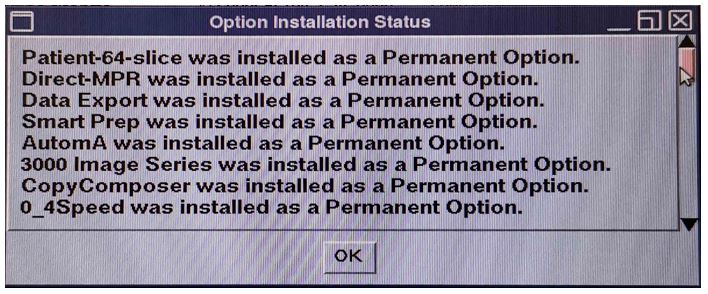
- A shell window will open and the System Stated will be restored. A pop-up window will appear reminding that options have been installed.
Click OK to close window.
Figure 24. Option Installation Status
 note: If the options can not be restored and need to be installed by new license(s), find the procedure in Software → Software Installation Procedures → Install Software Options by eLicense.
10 Service Pack Load
Procedure
- Open a Unix Shell.
- If Application software is up, perform{ctuser@hostname}cleanMon.
- In the Unix Shell, become root:
{ctuser@hostname } su -
Password: <password>
note: If the Password has not been modified by the site and is not known, contact Local GE Service. - Check which Service Pack is installed, type {root@hostname} #swhwinfo.
- Insert the Service Pack USB into USB drive in the host.note: Service Pack USB will include any new service pack and all previous released service packs that are still applicable. Load all of the Service Packs included in the latest Service Pack USB in sequence.
- Perform the following steps to install the Service Pack USB:
- Type the following install script:
[root@hostname ]# patch_install -usb
note:Any patches on the Service Pack USB will be listed. Before installation of each patch, the window will wait for user's confirmation as follows:
I will install update Patch Name , is this ok ? [y/n]
- Input y to install this patch or n to cancel installation of this patch.
- After installing completed, type: [root@hostname]#reboot
note: A reboot is always required after a patch is installed. Additional processes may be required for installing certain Service Pack media. Refer to the instructions sent with the Service Pack. - Type the following install script:
11 Flash Download (Approximately 20 minutes)
Procedure
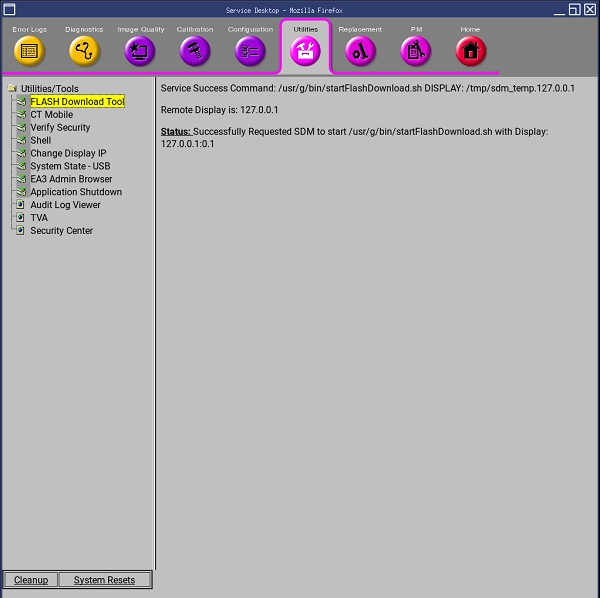
- Perform the Flash Download Utility found on the Common Service Desktop–Utilities Tab, select Flash Download.
Figure 25. Common Service Desktop - Utilities Tab, Flash Download
- When the Flash Download Window opens.
Select Query.
Figure 26. Flash Download Window
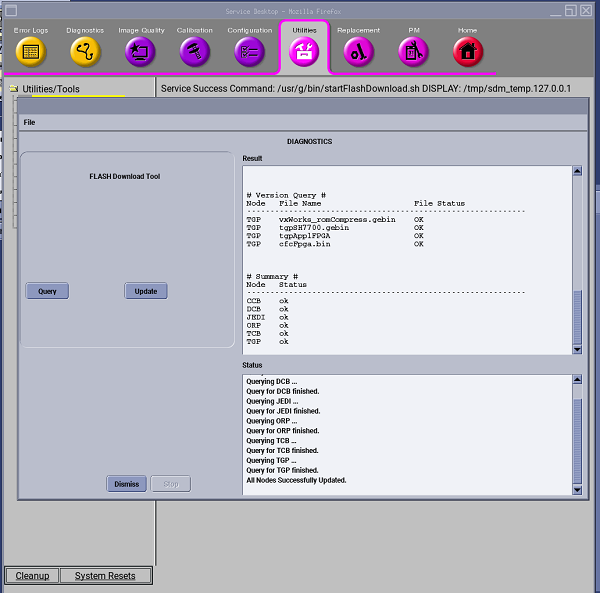
- Once the Gantry Hardware Flash Downloads successfully, select Dismiss. If some failure occurs, select Update and repeat until all Status is OK.
- Close the Common Service Desktop.
- Reconnect the Hospital Network cable at the rear of the Operator Console that was disconnected at the beginning of the LFC.
- Select Shutdown icon on the Desktop and restart the system.
12 NanoCloud AWS Installation
Restore the User Preference during nanoAWS installation if there is backup file of User Preference was restored into /usr/g/ctuser/Download.
13 Final Save System State
Procedure
- Perform the System State Save Restore procedure and save a System State Backup to USB Flash Drive.
- Backup to USB Flash Drive. Save the System State Backup media in a safe and secure location for future service activity.
14 Finalization
Procedure
- Perform System Scanning Tests in the Functional Checks chapter of this manual to confirm proper operation.
- Reinstall Console Front Cover.