MR Magnet - Safety Requirements
1 Safety Procedures for Servicing Highly Ferrous Devices
 |
|

This section introduces an explicit service policy when servicing highly ferrous devices in a magnetic field. Devices such as docks, longitudinal drive motors, blowers, passive shims, and coldheads are examples of highly ferrous devices that fall under this policy as follows:
For more information, refer to Handling of Ferrous Material.
2 Magnet Safety
2.1 Magnet Safety Considerations
The magnetic resonance imaging (MRI) system utilizes a magnet that can have a field strength several thousand times greater than that of the earth's magnetic field. The magnetic field surrounding the magnet is called the fringe field, and extends from the magnet's isocenter in all dimensions. The fringe field may present a hazard to persons and equipment within the surrounding area. Therefore, magnetic field precautions must be applied to the floors above and below the magnet, as well as to the surrounding space on the same level. To minimize the risk to persons and equipment when the magnet is at field, follow the precautions listed below.
If unsure whether an object is ferromagnetic (attracted to the magnet), use a small hand magnet to check the object before bringing it into the magnet room. If the device is ferromagnetic, follow the applicable service procedure for that device or contact local support with concerns.
Unless a specific responsibility is otherwise indicated, these statements apply to anyone accessing the system.
-
GE Task: Post security zone signs on both sides of any doors that lead into the magnet room to alert people of the high magnetic field and not to bring ferromagnetic objects into the magnet room. (See Figure 1 and Figure 2.)
-
(For DV23.0 and earlier)
For 0.2T, 0.35T, 0.7T, 1.0T and 1.5T systems, use Magnetic Field Security Zone Sign (P/N 5116165) shown in Figure 3
-
(For DV23.0 and earlier)
For 3.0T systems, use Magnetic Field Security Zone Sign P/N 5120663. (The 3.0T sign has “3.0T Magnet” in red lettering under the WARNING text at the top.) The sign is shown in Figure 4
-
(For DV23.1 and later)
For 0.2T, 0.35T, 0.7T, 1.0T and 1.5T systems, use Magnetic Field Security Zone Sign (P/N 5458376) shown in Figure 5.
-
(For DV23.1 and later)
For 3.0T systems, use Magnetic Field Security Zone Sign (P/N 5455191). The 3.0T sign has “3.0T Magnet” in red lettering under the WARNING text at the top. The sign is shown in Figure 6.
-
For 7.0T systems, use P/N 2360019-2.
-
For 9.4T systems, use P/N 2360019-3.
-
(For DV23.0 and earlier)
-
Customer Task: Post WARNING signs (supplied with the system and not a FRU) outside the 5-Gauss zone alerting persons with cardiac pacemakers, neurostimulators, and other biostimulation devices of the effect of the magnetic field on these devices. (See Figure 7 for the system version DV23.0 and earlier sign. See Figure 8 for the system version DV23.1 and later sign.) Post these signs two days before activation of the magnet for maximum impact.
note:Signs should be posted outside the 5-Gauss line alerting personnel of this requirement. Because the magnetic field is three dimensional, signs should also be posted on the floors above and below the magnet room in which the 5-Gauss line exists.
-
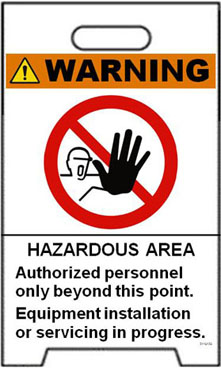
GE Task: Set up the Authorized Personnel signs (P/N 5116158, supplied with the system and not a FRU) at the entrance(s) to the magnet room before starting of magnet service procedures. (See Figure 9.)
-
GE Task: Notify responsible personnel two days before activation of the magnet to allow for preparatory actions.
-
GE Task: Do not bring ferromagnetic objects (including tools, pens, tape measures, and vacuum pumps) into the magnet room when the magnet is at field unless otherwise indicated in the GE Service Methods documentation.
-
GE Task: For active shield magnets, refer to the Pre-Installation Manual (PIM) for the 5,100, and 200 Gauss zones. For nonactive shield magnets (such as SIII and 7.0T), measure the Gauss levels in the surrounding area and make sure the 5, 100, and 200 Gauss zones for that site are specified in writing and left at the site in the same location along with a paper copy of the service safety manuals.
note:PIMs are available from the Common Documentation Library (CDL).
-
Do not bring ferromagnetic objects within the 200 Gauss zone, and do not bring ferromagnetic objects on wheels within the 100 Gauss zone.
-
Use only nonmagnetic cylinders, nonmagnetic cylinder carts, and Dewars when transferring cryogens into an energized superconducting magnet.
-
Do not take self-winding watches, magnetically-coded credit cards, magnetic recording heads, magnetic tapes, or cameras near the magnet when it is at field.
-
Identify the magnetic field strength of the system before entering the magnet room to perform service procedures. For systems with a magnetic field strength of 3.0T and higher, the field strength is displayed on the security sign posted on the magnet room door.
-
Do not bring the nonmagnetic tool kit into the magnet room. The case has ferrous components that will result in being attracted to the magnet in field zones greater than 500 Gauss.
The local GE Field Service operation will provide the highly visible (orange, black, and white) security and warning signs in the primary local languages.
Figure 1. Security Sign on Outside of All Magnet Room Doors
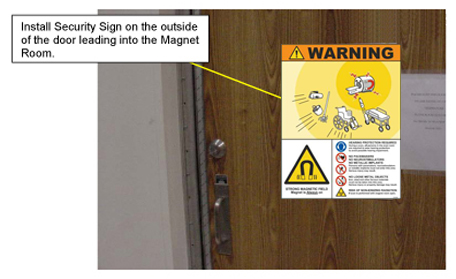
Figure 2. Security Sign on Inside of Magnet Room Doors that Open Outward
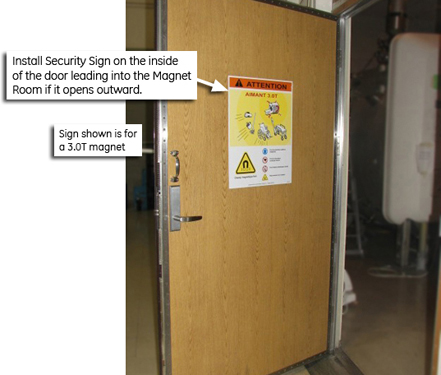
Figure 3. System DV23.0 and Earlier Magnetic Field Security Zone Sign (0.2T, 0.35T, 0.7T, 1.0T and 1.5T) P/N 5116165
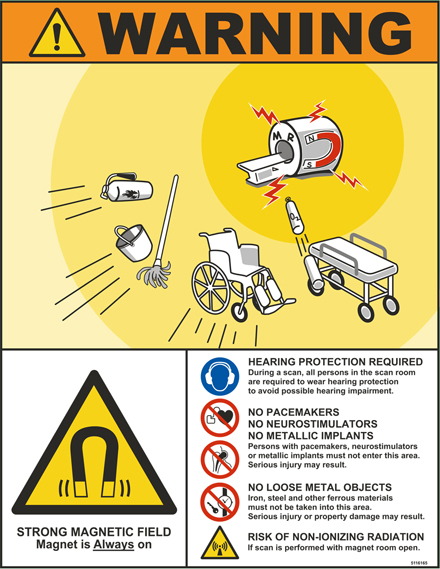
Figure 4. System DV23.0 and Earlier Magnetic Field Security Zone Sign (3.0T) P/N 5120663
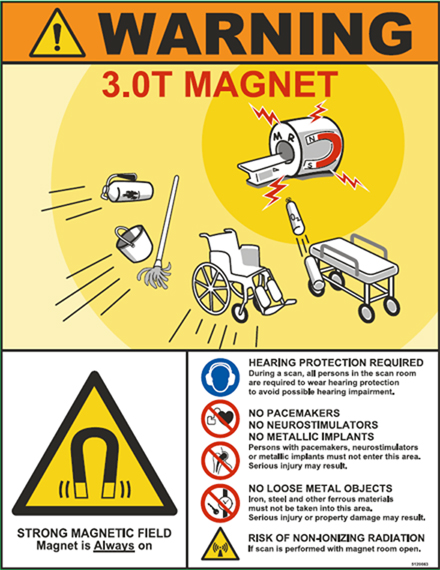
Figure 5. System DV23.1 and Later Magnetic Field Security Zone Sign (0.2T, 0.35T, 0.7T, 1.0T and 1.5T) P/N 5458376
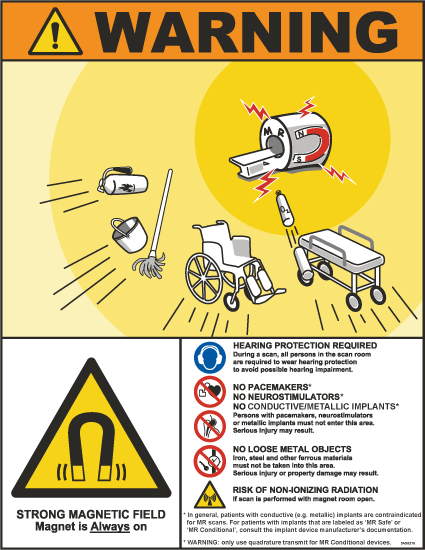
Figure 6. System DV23.1 and Later Magnetic Field Security Zone Sign (3.0T) 5455191
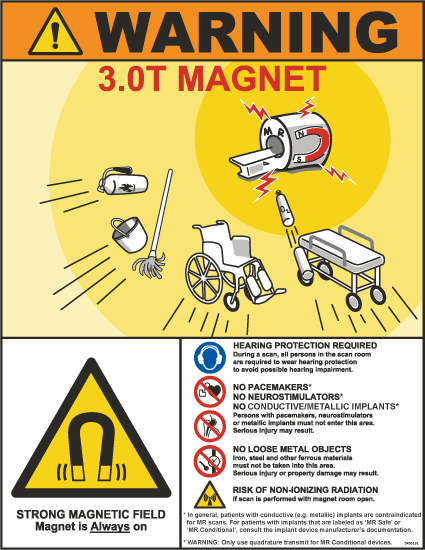
Figure 7. System 23.0 and Earlier Magnet Field Exclusion Zone Warning Sign (P/N 5116163)
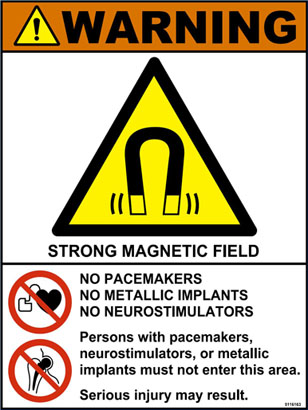
Figure 8. System DV23.1 and Later Magnet Field Exclusion Zone Warning Sign (P/N 5457590)
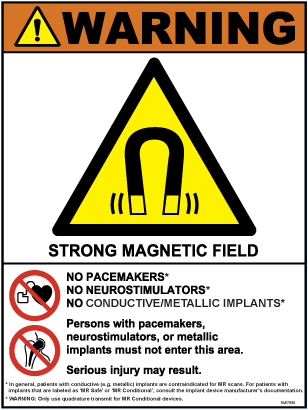
Figure 9. Authorized Personnel Sign (5116158)
2.2 Emergency Situations
The magnet technology used on MR systems may vary from one product design to another. There are three basic magnet technologies used by suppliers today: 1) superconducting magnets, 2) permanent magnets, and 3) resistive magnets.
Each magnet technology has emergency response processes unique to that design. For example, If a person is pinned to the magnet by a ferromagnetic object or that object has become attached to the magnet, the magnet technology will dictate the appropriate action to be taken. Refer to the appropriate magnet section in this document and First Aid/Emergency Situations for specific actions. This document addresses designs relating to superconducting magnets.
3 Superconducting Magnets
3.1 Introduction
Superconducting magnets contain cryogenic liquids (liquid helium = 4 kelvin (-452 °F, -269 °C); liquid nitrogen = 77 kelvin (-321 °F, -196 °C) and generate a strong three-dimensional magnetic field. These conditions require safety precautions to be taken to prevent serious injury (cryogenic burns, asphyxiation, explosion, fire, shock, ferromagnetic projectiles, or other magnetic field effects). The safety precautions/requirements contained in the following sections must be reviewed, understood, and implemented before performing any service on a superconducting magnet. Make sure that all magnet service is performed by trained and authorized personnel and all safety equipment is in place.
All persons working with cryogens or cryogenic liquids should understand the following:
-
Nature and properties of liquid and gaseous helium and nitrogen
-
Specific instructions on the equipment
-
Use and care of protective equipment and protective clothing
-
Safety and first aid
-
Handling emergency situations such as leaks, spills, and fires
3.2 Cryogen Safety Requirements
3.2.1 Site Precautions
The Field Service Engineer is responsible to ensure the following items are in compliance:
-
Review all service processes to be performed on the magnet with the facility Safety Officer or with local authorities (fire department, safety council, etc.) and obtain any required permits prior to magnet commissioning and servicing.
-
There are two types of venting required in the magnet room: magnet room venting and cryogen venting.
-
Magnet room venting:
-
Ensure magnet room venting has been installed, tested, and operating in conformance with pre-installation manual requirements.
-
Check that there are provisions for exhausting the gas through the magnet vent system for any service action that releases large quantities of cryogenic gas.
-
-
Cryogen venting:
-
Ensure the magnet is vented in conformance with the pre-installation manual requirements. Magnet plumbing and the vent system shall be inspected for leaks during magnet installation.
-
During nitrogen pre-cool (if applicable to the on-site magnet), use a portable floor fan and exhaust duct to keep fresh air circulating throughout the room. This is necessary because too much nitrogen can displace oxygen.
-
Secure the door into the magnet room in the open position before starting any service action that results in the handling or release of cryogens from the magnet. Secure the ceiling hatch and rear door in the open position if in a mobile van.
-
Make sure a second person (GE employee or contractor trained in these safety requirements) is present in the area during magnet service in case of emergency.
-
Make sure a working phone line accessing an outside line is available in case of an emergency.
-
Set up Authorized Personnel Only signs outside the magnet room door(s) before starting any magnet servicing.
-
Make sure your personal oxygen monitor is calibrated and operating properly before beginning any magnet service.
-
Always maintain a clear exit path. If a Dewar is to be used in the magnet room, the path must be wide enough to accommodate the Dewar.
-
-
3.2.2 Equipment Handling Precautions
-
Do not bring any ferromagnetic equipment, Dewars, or cylinders into the magnet room when the magnet is ramped. They will become dangerous projectiles in the presence of the magnetic field.
-
Do not bring any boxes into the magnet room without first checking them for ferromagnetic components.
-
Helium gas cylinders are pressurized to ~2,400 psi. Secure each helium cylinder before removing the protective cap, and open the main valve very slowly to prevent any possibility of a fatal release of explosive gas. Make sure gas cylinders are stored in an upright secured position.
-
Firmly hold the unattached end of the gas hose during a purge to prevent the hose’s “whipping“ motion.
-
Keep Dewars in the vertical position at all times. Dewars should have wheels mounted at the base for transport. If wheels are not present, use a low platform dolly that fully encompasses the Dewar’s base for moving. Do not slide or roll Dewars. Use a nonferrous hand truck to move gas cylinders. Use a small hand magnet to check the dolly or hand truck to ensure it will not be pulled into the magnet before bringing it into the magnet room.
-
Make sure the transportation route for Dewars and gas cylinders is clear of obstacles and restrictions.
-
Check Dewars for high pressure, and follow documented service procedures for reducing pressure prior to use.
-
Check all equipment, Dewars, and gas cylinders for leaks.
-
Make sure that safety relief valves and regulators are operating properly.
-
Store Dewars in a well-ventilated area as outlined in the room ventilation pre-installation manual.
3.2.3 Cryogen Handling Precautions
-
Contact of liquid cryogens or their vapors with the eyes can cause severe frostbite, even when contact is too brief to affect the skin. Always wear safety glasses and a face shield when handling cryogens.
-
Protective clothing (long sleeve shirt, long pants, protective apron/jacket), dry nonabsorbent insulated gloves, and face/eye protection (face shield and safety glasses) shall be worn when handling or being exposed to cryogens to prevent cold burns resulting from contact with the cryogenic liquid or gas.
-
Make sure a calibrated, functioning oxygen monitor (if present) is installed in the magnet room in conformance with site requirements in the magnet room and cryogen storage area. The position of the O2 monitor sensor should be at a level that corresponds to the cryogen product being stored or dispensed (for liquid helium, the sensor should be near the ceiling; for liquid nitrogen, the sensor should be near the floor).
-
If the alarm mode of the oxygen monitor (if present) is activated, immediately evacuate the room. Determine the cause and if ventilation is a problem, correct the situation.
-
Be sure that the oxygen monitor (if present) is reading a safe level before entering the affected area to continue with service procedures.
-
-
Smoking is prohibited in the magnet room and around cryogens. The extreme low temperatures of liquid helium and nitrogen cause oxygen from the air to liquefy on cold surfaces (for example, on the transfer tubes). This produces a highly enriched oxygen liquid. There is a potential fire danger if grease or oil come in contact with these surfaces, because they are combustible substances.
-
When pluming a stinger, always point the stinger toward the ceiling and away from the face at a 45-degree angle.
-
Do not bring more than 1,000 liters or two Dewars (whichever is less) of cryogens into the magnet room.
-
Do not bring nitrogen and helium Dewars into the magnet room at the same time.
3.2.4 Magnet Service Precautions
-
Ramp the magnet down to zero field before any service requiring opening/exposure to the helium vessel and/or cryogenic gas/liquid, except for the removal of fill and ramp lead port caps. This prevents the possibility of a magnet quench and rapid expulsion of cryogenic helium gas and liquid.
-
Make sure non-ferromagnetic fiber or composition safety shoes are worn in the magnet room.
-
Observe the helium vessel pressure gauge and vent the magnet down to less than 0.5 psi before removing ramp/fill port caps or loosening a component, resulting in the release of cryogenic helium gas and liquid.
-
Never allow a helium Dewar to empty during a magnet fill, resulting in a magnet quench from the introduction of warm helium gas.
-
Wear proper personal protective equipment (PPE).
-
Use the appropriate service procedure, and exercise caution when inserting ramp leads or a shim lead into a ramped magnet to prevent a quench.
-
Avoid rapid head and eye movements when working near or inside the magnet bore to minimize dizziness.
-
Always have a second MR safety-trained person available when:
-
specified by service instructions,
-
handling highly ferrous parts, and
-
performing work near or inside the magnet bore.
-
-
Never allow yourself to be positioned between the magnet and any unknown objects that may be brought into the magnet room.
-
Limit the access into the magnet room before performing service in the room. This can be achieved by installing a yellow and black caution tape across the door opening and placing the Authorized Personnel sign below it.
-
Identify the type of magnet and its field strength before performing service in the magnet room. The security signs are installed on the entrance doors into the magnet room. These signs indicate the field strength of magnets greater than 1.5T inside the room.
-
Use caution when using the non-titanium tools because they are attracted to the magnet at fields over 500 Gauss.
-
Do not bring the nonmagnetic tool kit into the magnet room. It will become attracted to the magnet if exposed to a field greater than 500 Gauss.
3.2.5 First Aid/Emergency Situations
In the event of an emergency situation:
-
If a human being is pinned to the magnet by a ferrous object, immediately push the button on the Emergency/Magnet Rundown Unit (ERU or MRU) to quench the magnet.
-
Notify proper emergency responders.
-
Do not attempt to rescue personnel. Rescues must be made by trained personnel.
-
For immediate treatment, the frostbitten or cold burn area should not be massaged or rubbed in any way. Flushing by running under a tap/faucet will actually create further tissue damage due to the impact of the flowing water striking the wounded area. Instead, the area should be immersed in tepid water rather than flushed. After first aid treatment is applied, seek proper medical attention.
-
(For helium-only systems) In case of a magnet cryogenic vent failure during a quench, stay near the floor where the oxygen will be present, and immediately exit the magnet room.
-
If a ferromagnetic object becomes attached to the magnet, contact your MR Regional Support Engineer for directions before attempting removal.
If in the magnet room when a quench occurs, follow these basic rules:
-
Remain calm; do not panic.
-
Open the scan room door, prop it open, and exit the room immediately.
-
Turn on the exhaust fan for the scan room (if not automatically turned on by the oxygen monitor, if present).
-
If the door cannot be opened, stay near the floor. This is where the oxygen is located.
-
If the door cannot be opened, exit through the window.
3.3 Magnet Field Safety Requirements
3.3.1 Site Precautions
In addition to all considerations listed in Magnet Safety Considerations, make sure the following precautions are followed to minimize risk to personnel resulting from the magnetic fringe field:
-
Post the Authorized Personnel warning sign (P/N 5116158) at the magnet room entrance before ramping the magnet.
-
Before ramping the magnet, ensure all ferromagnetic material (such as the blower box) is either properly installed as a part of the magnetic resonance system OR completely removed from the magnet room. Confirm that the room construction does not contain ferrous material.
-
Before ramping the magnet, make sure that the Magnet Rundown Unit (MRU) is operating properly.
-
Do not loosen any ferromagnetic components on a ramped magnet unless specifically called for in the service documentation.
-
Wear cryogen gloves when opening or closing the coldhead motor shield.
-
Use caution when opening or closing the top half of the coldhead motor shield. Never put your hand or fingers between the motor shield and mounting bracket.
3.3.2 Ramping Precautions
A superconducting magnet at field is a high-energy storage device capable of discharging rapidly (quenching), creating a high voltage across the main leads. Make sure the following precautions are observed when ramping a superconducting magnet:
-
When working with the main lead connections that are installed into a ramped magnet, do not touch both main lead extensions at the same time or allow them to come in contact with one another.
-
Allow main lead extensions to cool before fully inserting them into a ramped magnet to prevent any possibility of a quench.
-
Make sure the power supply has passed all functional checks, and the input power cable is disconnected before connecting it to the main power leads.
-
Make sure the final magnet “parking” current and voltage polarity have been recorded and will be available if a ramp-down is required. An incorrect polarity connection will result in a magnet quench.
-
Use the appropriate hold-down tool to properly secure ramp leads to the magnet.
3.3.3 Emergency Ramp-Down of Magnet
-
Make sure the MRU was installed in conformance with the GE Magnet Service Manual, the batteries were charged for 24 hours, and the MRU passed the functional checks in conformance with the supplier manual before ramping the magnet.
-
Make sure the ramp-down methods covered in the introduction of the GE Magnet Service Manual are fully understood by Field Service Engineers involved with the MR equipment.
-
Hospital personnel involved with the MR equipment should be familiar with the equipment Operator Manual and MRU operation.
3.4 Magnet and Cryogens Service Safety Requirements
3.5 Second Person Service Requirements
A trained second person is required on site whenever service is performed on the superconducting magnet subsystem. It is critical that this individual is always present to ensure everyone’s safety. It is more than just having a second person around while working. A second person is someone who will maintain communication at all times, and sound the alarm in case of an emergency, and may even assist in performing the service procedure if qualified.
All individuals selected to perform the task of a second person must comply with the prerequisite training. Refer to the itemized list below and Table 3 for a list of responsibilities for the MR safety-trained second person.
-
The second person can be an MR engineer, other GE employee, a contractor or a contracted employee. The MR engineer and second person must review safety precautions and the service procedure to be performed before entering the MR suite. The second person must be dedicated to the MR service task, and demonstrate MR safety competency by reviewing the MR512 course and/or the SRA.
-
The medical clearance questionnaire must be completed. The second person must self-certify that s/he meets the criteria to work in an MR environment. If this issue was addressed previously via another internal GE mechanism, the employee must state there has been no change since previous approval.
-
The MR safety-trained second person must:
-
Know how to evacuate the area (emergency escape route) as demonstrated by the MR FE.
-
Review specific routes from the room, and understand the host site evacuation process.
-
Understand the fire protection, low oxygen and any other site safety systems and discuss appropriate response for each scenario.
-
-
Both the MR FE and MR safety-trained second person need to understand the capabilities of the host site emergency response team, and review possible scenarios and preplan what to do and when based on the situation.
note:The MR safety-trained second person is not trained in rescue. His or her role is to summon trained personnel so that rescue can be performed.
-
Both the MR FE and MR safety-trained second person must review the shut down/emergency actions the MR safety-trained second person is authorized to perform based on the situation.
3.6 Certification Agreement for GE Healthcare
 |
|